
Key points
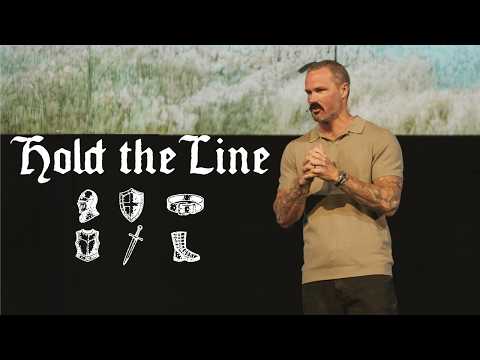
1Ephesians was written by Paul to prepare a church for war, not just to comfort it.
Pastor Daniel walks through who wrote the letter (Paul, once a hostile opponent of the church, transformed by God), who received it (the church in Ephesus), and why it was written. He explains that Ephesus was a wealthy port city that was also the occult capital of the world, home to the temple of Artemis, yet a thriving church was birthed right in the middle of it, as seen in Acts 19 where new believers publicly burned their sorcery books.
If you don't realize that you are in a war, I'm telling you, you are already fighting from a position of of defeat
Illustration
Reference to Acts 19 and the Ephesian believers burning their sorcery books
2The struggle you're really facing is spiritual, not against the people you blame.
Using Ephesians 6:12, Pastor Daniel says we're tempted to name our spouse, boss, or a politician as the enemy, but Paul insists the real fight is against organized, structured spiritual opposition. He warns against two wrong postures Americans take: dismissing spiritual warfare entirely, or seeing a demon behind everything.
The real enemy is the spiritual opposition that's coming against you and it's not random, it's organized
3Know your enemy: he is destructive, deceptive, and determined.
Pastor Daniel unpacks three character traits of Satan from Scripture: his singular goal is destruction (John 10:10), his tactic is deception, appearing as an angel of light (2 Corinthians 11:14), and his posture is patient, predatory pursuit, like a roaring lion (1 Peter 5:8). He illustrates deception with the idea that sin is genuinely fun for a while, which is exactly what makes it dangerous, and destruction with the image of a city leveled by a tornado.
if you fight a spiritual battle with natural weapons, I'm telling you, you're gonna lose every time
Illustration
Comparison of sin's destruction to a city devastated by a hurricane or tornado
4Intense opposition often signals that a season of breakthrough is coming.
He points to the pattern throughout Scripture, and especially in Jesus' life, where intense trial and testing precede great ministry and breakthrough. He explains that the level of attack often reveals the level of assignment on a life, and that the enemy tries to get people to quit right before what God has planned unfolds.
the level of the attack reveals the level of assignment that is on your life
5God doesn't just want to give you strength, He wants to become your strength, accessed through weakness and surrender.
Drawing on Joshua 1:9, Psalm 73, and Paul's own thorn in the flesh in 2 Corinthians 12, Pastor Daniel shows that access to God's power runs through admitted weakness rather than achievement. He uses the picture of a WWF tag-team match, where a beaten fighter crawls to tag in a stronger partner, as the picture of surrendering our weakness to draw on God's power instead of our own.
I think your greatest strength is found at your greatest point of surrender
A story from life
Story about his sister dating WWF wrestler Chuck Palumbo and his tag-team wrestling matches
6We've been given real weapons for spiritual warfare: the name of Jesus, the word of God, agreement in prayer, and praise and worship.
He walks through each weapon with supporting texts: the name of Jesus (Philippians 2, Acts 3-4, Luke 10, Proverbs 18), the word of God as the sword of the Spirit (Hebrews 4:12, Jesus resisting temptation in the desert), agreement in prayer (Matthew 18:19-20) explaining why the church has a prayer team every Sunday, and worship as warfare, noting Israel's practice of sending worship leaders ahead of the army into battle.
It's praise on my mouth and a bible in my hand, and I believe that somehow God will take care of the rest
Application
Pastor Daniel's invitation is to stop fighting a spiritual war with natural weapons and pick up the ones God actually gave us.
Identify the real enemy in your struggle
Stop blaming your spouse, boss, or political figures as the source of the fight in your marriage, mind, or home, and recognize the opposition is spiritual.
Bring your weakness into the light
Instead of hiding your struggles, start sharing them honestly in community so you can tap into God's strength rather than trying to fix everything in your own.
Declare the name of Jesus over your life
When you don't know what else to do about your marriage or mind, speak the name and blood of Jesus over your home, your children, and your circumstances.
Know the word of God for yourself
Don't just take a speaker's word for it; test everything, including this message, against Scripture so the enemy can't twist good things into deception.
Use agreement in prayer and worship as warfare
Get into a group of people who know you, visit the prayer team after service, and engage in worship even when your heart is uncertain, treating both as active battle rather than routine.
Take it into your week
Rewind AI contributed study material from the sermon transcript; church-authored wording and verified sermon quotes keep their own source. Always trust the sermon itself over anything here. How Rewind uses AI


