
Key points
1We are in a spiritual war, so a hard life should not surprise us.
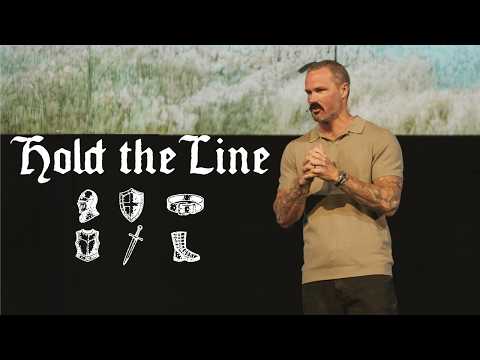
Pastor Tom opens by saying life is hard because this is Mesa, not heaven — we woke up behind enemy lines. Just as no military commander goes to war without an objective and strategy, Jesus had both before He drafted us, and that objective and strategy are laid out in Romans 13-14.
You woke up this morning behind enemy lines
Life is hard because this is not heaven
This is Mesa
2God has always wanted people to see and know Him, culminating in Jesus, and He scales that through our Oikos — the eight to fifteen people watching our lives closely.
Using the analogy of television evolving from black-and-white to 4K, Pastor Tom traces how God gave increasing clarity about Himself through creation, the written word, and finally Jesus in high definition. He explains that 95% of people become Jesus followers because of someone they already knew, since 91% of our sensory receptors are devoted to sight — we believe what we watch, not just what we hear.
Illustration
Analogy comparing the increasing clarity of God's revelation to the historical evolution of television from black-and-white to 4K
3The world sees Jesus more clearly when you willingly submit to authority.
Working through Romans 13:1-2, Pastor Tom shows all authority is established by God, even oppressive Roman rule, and rebelling against it invites judgment. He distinguishes three categories of submission (easy, hard-but-required, and truly forbidden by Scripture) and warns that we often relabel category two as category three because we don't want to submit, not because we can't. He points out Satan's goal isn't bad government but no government — anarchy — because structure is what provides the relationships through which the gospel spreads.
we don't have to sell Jesus for the world. We don't have to argue people into the kingdom
But God is always gonna be less concerned about our rights than he is about his purpose
4The world sees Jesus more clearly when you love without conditions.
Pastor Tom distinguishes Greek words for love (eros, philios, storge) from agape, a word he says barely appears outside Christian writing — a no-matter-what, I-will-always-have-your-back love only God truly embodies. He walks through Romans 13:8-10, showing love fulfills the whole law and is owed as a continuing debt, always to our neighbor, meaning our front row of family, friends, and coworkers.
5The world sees Jesus more clearly when you avoid petty arguments over disputable matters.
Pastor Tom unpacks Romans 14's Roman controversy over meat sacrificed to idols and over which day to worship, showing Paul's answer is essentially 'stop quarreling' because these are matters where sincere, godly people land in different places. He warns that holding opinions too tightly can destroy — cause a loss to — a brother or sister for whom Christ died, quoting John Maxwell that we cannot overestimate the unimportance of practically everything, and applies it to modern fights like politics.
you cannot overestimate the unimportance of practically everything
Application
Pastor Tom frames the whole choice as: do you want to get your way, or do you want to change the world?
Submit to the authority over you
Whether at home, work, or in government, willingly live under authority — even flawed authority — because doing so puts the humility of Jesus on display for your front row.
Love the hardest person in your Oikos without conditions
Identify the one person in your circle who is hardest to love, and choose agape love toward them, love because of God's purpose, not love if they meet your conditions.
Stop quarreling over disputable matters
Let go of the food, politics, or opinion arguments you've turned into hills to die on, and make every effort toward peace rather than causing someone to lose faith over something that doesn't matter.
Take it into your week
Rewind AI contributed study material from the sermon transcript; church-authored wording and verified sermon quotes keep their own source. Always trust the sermon itself over anything here. How Rewind uses AI