
Key points
1James confronts the arrogance of assumption — planning our lives without consulting God.
Pastor Daniel walks through James 4:13-16, noting the emphatic 'now listen' in the Greek meant to grab a distracted reader's attention. James rebukes people who plan cities, business, and money-making without ever asking God, calling that boasting 'evil' — the same word used elsewhere of Satan.
2Jesus modeled total dependence on the Father's will rather than His own.
Pastor Daniel points to John 4:34, John 5:30, and John 6:38 to show Jesus repeatedly saying He came to do the Father's will, not His own. The challenge is that if even Jesus operated this way, believers have no excuse to plan their lives apart from God.
3Assumption is dangerous first because our perspective is limited.
He notes James 4:14's reminder that we don't even know what tomorrow holds, and tells the story of Joshua and the Gibeonites (Joshua 9:14) who examined the food but didn't consult the Lord, leading to a devastating treaty. God sees the whole picture we can't see, and consulting Him ahead of time can prevent painful detours.
it's not a sin to make plans, but it is a sin to leave God out of them
Illustration
The story of Joshua and the Gibeonites from Joshua 9 — Israel signed a treaty without consulting God because they were deceived by the appearance of the situation.
4Assumption is dangerous second because our flesh is deceitful.
Drawing on Jeremiah 17:9, Pastor Daniel explains that people are skilled at lying to themselves, rationalizing pursuits of 'more' — money, status, pleasure — as godly when they are really about self. He illustrates this with lottery winners who end up broke and miserable, and warns that not every open door is from God.
Not every open door is from god, not every opportunity is a calling, and not every plan is his plan
5Assumption is dangerous third because our time on earth is incredibly short.
He returns to James 4:14's picture of life as a mist that appears and vanishes, illustrating with a story about family businesses rarely surviving to a fourth generation, and quoting D. L. Moody's warning that our greatest fear should be succeeding at something that doesn't matter. Only God, His word, His people, and His kingdom are eternal.
A story from life
A conversation the preacher had the previous night with a man in merger-and-acquisitions work about how legacy businesses almost never survive to the fourth generation.
6The response is to build the posture of 'if it is the Lord's will, I will.'
Pastor Daniel highlights James 4:15 as the corrective prayer and posture — seeking God's will before deciding, not after. He shares his own practice with his wife of separating for a week to fast and seek God independently before big decisions, then comparing what God showed each of them.
Don't believe the lie that you'll figure it out one day. You'll live for God one day. It's the greatest lie of our humanity
“I'm not up here as like some used car salesman trying to convince you of a life for you. I'm up here as a satisfied customer trying, pleading with you, begging with you to go on the other side of radical obedience”
My life is not my own. My time is not my own. My future is not my own
A story from life
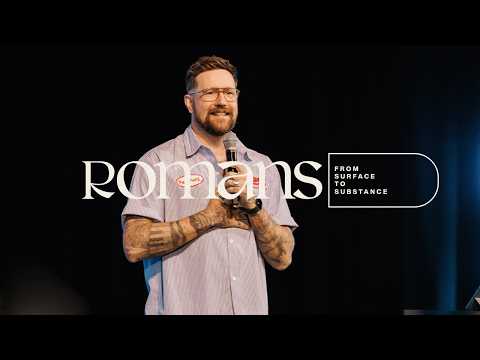
The preacher shares moments in his own life of wrestling with God over direction, and explains why he had Galatians 2:20 tattooed on his arm as a personal reminder.
Illustration
A study cited claiming people make approximately 35,000 decisions per day, used to frame the weight of daily decision-making.
Application
Pastor Daniel frames the charge as praying, 'if it is the Lord's will, I will' — seeking God on the front end of a decision instead of the back end.
Consult God before you decide, not after
Before saying yes to a promotion, a date, an engagement, or a move, seek God's heart first instead of only asking Him to bless or fix the decision afterward.
Get honest about your pursuit of 'more'
Examine whether your drive for money, status, or possessions has outrun your dependence on God, since that is the point where you're building your own kingdom instead of His.
Build a practice of seeking God on big decisions
Try what Pastor Daniel and his wife do: separate for a week, fast, seek God independently, and come back together to see if there's peace and alignment before moving forward.
Pray the prayer of surrender
Stand and pray, 'my life is not my own... not my will, but yours be done,' only if you mean it, inviting God into every part of your life, marriage, finances, and career.
Take it into your week
Rewind AI contributed study material from the sermon transcript; church-authored wording and verified sermon quotes keep their own source. Always trust the sermon itself over anything here. How Rewind uses AI